
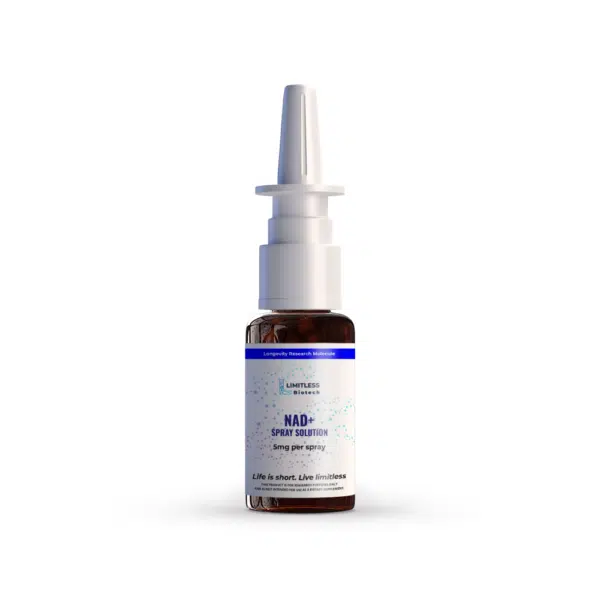


| Container | Spray Bottle |
|---|---|
| Presentation | Liquid |
| Weight | 500mg |
| Grade | lyophilized – 99%+, lyophilized – 98.5%+ |
Research
NAD+ and Cognitive Function
NAD+ is a vital molecule involved in many cellular functions, such as energy metabolism, DNA repair, and gene expression. Recent studies suggest that NAD+ may also benefit cognitive function and decrease neuroinflammation.
A study on chronic cerebral hypoperfusion (CCH) models, both in vivo and in vitro, discovered that NAD+ had positive effects on cognitive function and neuroinflammation. It achieved this by improving mitochondrial damage and reducing ROS production through the Sirt1/PGC-1α pathway [R].
Another study showed that experimentally boosting NAD+ levels improved cognitive function and synaptic plasticity in Alzheimer’s disease [R].
Overall, these studies suggest that NAD+ may have a positive impact on cognitive function and reduce neuroinflammation. However, more research is needed to fully understand the mechanisms behind these effects and to determine the potential benefits for humans.
NAD+ and Muscle Health
Research has shown that NAD+ is important for muscle development, regeneration, aging, and disease. Lower levels of NAD+ have been linked to deleterious effects on muscle health, while higher levels have been shown to augment muscle health [R].
One study revealed that NAD+ therapeutics offer a new nutritional method to potentially influence the function of mitochondria in skeletal muscle and metabolic adaptation [R].
According to a study published by Janssens and colleagues, NAD+ levels can serve as a measure of muscle health in older individuals. Additionally, the study found that exercising can raise NAD+ levels, potentially explaining why it helps counteract age-related muscle decline [R].
NAD+ and Metabolic Health
NAD+ is crucial for the metabolism of eukaryotic cells, as it transfers electrons between its oxidized (NAD+) and reduced (NADH) states. This process is vital for oxidation-reduction reactions that capture or release cellular energy in the form of ATP [R].
Intracellular levels of NAD+ decrease as individuals age and become obese. However, exercise and caloric restriction have been shown to increase NAD+ levels and have beneficial effects. Therefore, NAD+ is considered a potential target for achieving similar benefits to those obtained through healthy lifestyle changes.
Moreover, NAD+ metabolism is highlighted as a potential focus for treating metabolic disorders, including obesity, diabetes, dyslipidemia, and fatty liver.
Legal Disclaimer
This product is sold as a pure compound for research purposes only and is not meant for use as a dietary supplement. Please refer to our terms and conditions prior to purchase.
Safety Information: Keep this product out of the reach of children. This material has limited research available about it and may result in adverse effects if improperly handled or consumed. This product is not a dietary supplement, but a pure substance, sold as a raw material. We attest exclusively to the quality, purity and description of the materials we provide. This product is for use and handling only by persons with the knowledge and equipment to safely handle this material. You agree to indemnify us for any adverse effects that may arise from improper handling and/or consumption of this product.
The articles and information on products that may be found on this website are provided exclusively for the purposes of providing information and education. These items are not pharmaceuticals or medications, and the Food and Drug Administration has not given permission for the treatment or prevention of any disease, medical condition, or ailment using them.


Reviews
There are no reviews yet.